
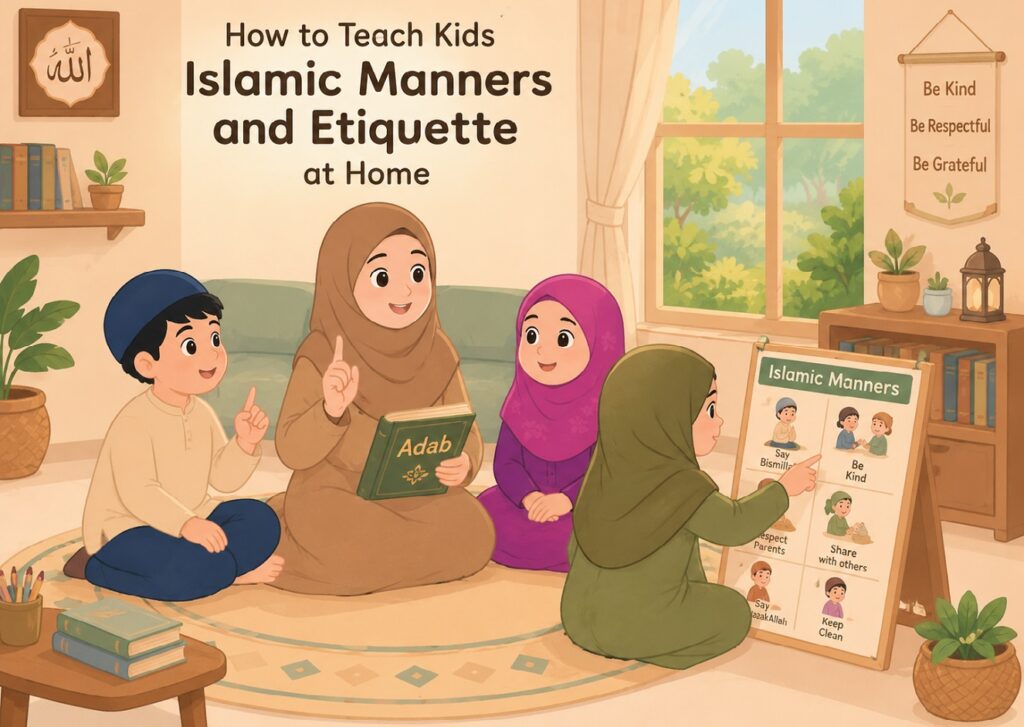
How to Teach Kids Islamic Manners and Etiquette: Small Habits, Lifelong Character
Introduction
As parents, we often focus on what our children learn in school. We celebrate good grades, completed homework, and academic achievements. But there is another kind of education that shapes a child’s future just as much: character. Manners, kindness, respect, honesty, gratitude, and compassion are lessons that stay with children long after textbooks are forgotten.
In Islam, good manners are not an extra part of faith—they are an essential part of it.
The beautiful thing is that children do not learn manners from lectures alone. They learn by watching, observing, and copying the people around them.
Children are often little mirrors. They reflect what they see.
Children Learn What They Live
Have you ever noticed how children copy the way adults speak, walk, laugh, or react?
A child who hears kindness often speaks kindly.
A child who sees respect learns respect.
A child who watches patience begins to understand patience.
Before children enter a classroom, their first school is their home.
Before they meet teachers, their first teachers are their parents and family members.
Every conversation, every reaction, and every habit teaches them something.
That is why teaching Islamic manners begins with us.
Children may not always listen to what we say, but they are always watching what we do.
The Home: A Child’s First School
The atmosphere of a home shapes a child’s character.
When children regularly see:
- Respect between parents
- Kind words during disagreements
- Gratitude for blessings
- Helping one another
- Speaking truthfully
they begin to see these behaviors as normal.
These lessons become part of who they are.
The manners they learn at home are often the same manners they carry into school, friendships, and later life.
Teaching Respect Through Everyday Actions
Respect is one of the most important Islamic values.
Children should learn to:
- Greet others warmly
- Listen when someone is speaking
- Speak politely to elders and younger children alike
- Respect differences
- Avoid rude language
The best way to teach respect is to show it consistently in our own interactions.
The Importance of Kind Speech
Words have power. Islam teaches us to speak kindly and thoughtfully.
Children should learn:
- To say please and thank you
- To avoid shouting unnecessarily
- To avoid hurtful words
- To speak with gentleness
If children regularly hear positive and respectful communication at home, they naturally begin using the same language.
What Children Hear Matters
Sometimes adults assume children are not paying attention. But they are.
When children hear:
- Gossip
- Backbiting
- Constant criticism
- Mocking others
they absorb these habits.
Islam teaches us to guard our tongues and speak well of others.
If we do not want children to gossip, we must avoid gossiping in front of them.
If we want them to speak kindly, they must hear kindness from us first.
The manners we model become the manners they practice.
Islamic Etiquette with Animals
One of the most beautiful aspects of Islam is that kindness extends beyond people.
Islam teaches mercy towards animals.
Children can learn:
- To feed animals gently
- Never to hurt animals for fun
- To offer water when possible
- To treat every creature with compassion
These small lessons help children develop empathy and responsibility.
Islamic Etiquette with Plants and Nature
Islam encourages care for the world around us.
Children can learn:
- Not to damage plants unnecessarily
- To water and care for gardens
- To appreciate Allah’s creation
- To keep parks and public places clean
Teaching respect for nature teaches gratitude for Allah’s blessings.
Teaching Gratitude Every Day
A grateful child often becomes a happier child.
Simple habits can help:
- Saying Alhamdulillah regularly
- Thanking others for their kindness
- Reflecting on daily blessings
- Making dua for what they have
Gratitude shifts a child’s focus from what they lack to what Allah has already given them.
Manners During Disagreements
Children will make mistakes.
They will argue with siblings and friends.
These moments become opportunities to teach:
- Patience
- Forgiveness
- Listening
- Self-control
Islamic manners are not only for easy moments. They are most important during difficult ones.
Why Islamic Manners Matter
Good manners are often what people notice before anything else.
A child who is honest, respectful, kind, and compassionate becomes a positive example wherever they go.
These qualities benefit:
- Family relationships
- Friendships
- School life
- Future careers
- Society as a whole
Islam Teaches Beauty in Small Things
One of the remarkable things about Islam is that it teaches manners in even the smallest details of life.
How we speak.
How we eat.
How we greet others.
How we care for animals.
How we treat the environment.
How we respect our parents.
How we interact with neighbours.
These small actions may seem simple, but together they shape strong character.
Small habits create a big impact.
Final Thoughts
Raising children with good manners is not about perfection. It is about consistency. Children learn most from what they see every day. When they grow up in a home filled with kindness, respect, gratitude, honesty, and compassion, those values become part of who they are. The goal is not simply to raise successful children. The goal is to raise children with beautiful character, children whose actions reflect the beauty of Islam wherever they go.
Because sometimes the most powerful lesson a child learns is not from a book, but from the example they see at home every single day.
Explore More
Want to help your child learn Islamic manners through stories they can understand and remember?
Explore our book Little Muslim With Big Heart Islamic Manners and Values for kids created to help children learn kindness, gratitude, honesty, respect, and good character through engaging storytelling and meaningful lessons for everyday life.
I wrote this article to help parents introduce Islamic manners in simple, practical ways at home. I’d love to hear how your family teaches adab and etiquette to children. Feel free to share your ideas below.