
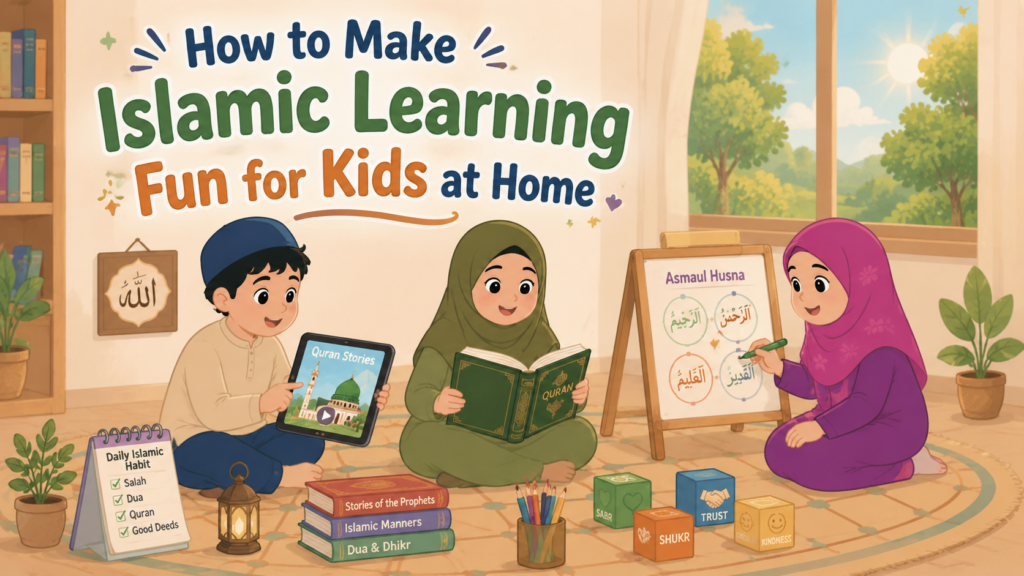
Introduction
Many parents today face the same challenge:
“How do I balance school learning and Islamic learning for my child?”
Between homework, school routines, screen time, and busy schedules, Islamic learning can sometimes start feeling like “extra work” for children. But what if learning about Islam could feel joyful, exciting, and part of everyday life?
The truth is, children learn best when they feel involved, curious, and emotionally connected. And with a few simple changes, parents can make Islamic learning fun, gentle, and engaging at home.
Both Learnings Matter: Deen & Dunya
As parents, we want children to succeed in both:
📚 Academic education
🌙 Islamic education
One helps them grow in the world, while the other helps guide their heart and character. Children do not need long lectures every day. Small meaningful moments can create a strong connection with Islam over time.
1. Turn Learning Into Activities
Children naturally enjoy hands-on learning. Instead of only reading, try:
✨ Flash cards
✨ Coloring sheets
✨ Matching games
✨ Islamic quizzes
✨ Reflection journals
✨ Storytelling time
When learning feels interactive, children participate more willingly.
2. Use Stories Instead of Long Explanations
Children remember stories for years. Through stories, they can learn:
- Kindness
- Gratitude
- Patience
- Tawakkul
- Good manners
- Love for Allah and the Prophet ﷺ
Simple storytelling creates emotional connection and understanding.
3. Create a Small Islamic Learning Corner
You don’t need a big setup.
A small basket or shelf with:
- Islamic books
- Coloring sheets
- Flash cards
- Stickers
can make children excited to explore learning on their own.
4. Connect Islam to Daily Life
Islamic learning should not feel separate from everyday life.
Simple moments matter:
- Saying Bismillah before homework
- Saying Alhamdulillah after meals
- Making dua before exams
- Talking about Allah’s creations outdoors
These habits help children naturally live Islam daily.
5. Avoid Too Much Pressure
Children learn best through love and consistency.
Instead of forcing:
- encourage curiosity
- celebrate small efforts
- appreciate participation
A positive experience builds long-term love for learning.
6. Make Learning Feel Special
Children love feeling involved. Try:
- Weekly Islamic activity day
- Reward stickers
- Trivia nights
- Family story sessions
- “Question of the day” moments
These small experiences make learning memorable.
Why Fun Learning Matters
When Islamic learning feels enjoyable, children:
✔ stay engaged longer
✔ ask more questions
✔ remember lessons better
✔ develop positive feelings toward Islam
Learning becomes something they look forward to.
Final Thought
Children do not always remember every lesson. But they remember how learning made them feel. A warm story, a fun activity, a loving conversation, these small moments can shape a child’s connection with Islam for years to come.
Explore More
At Prophetic Tales, we create Islamic books, flash cards, journals, and learning kits designed to make faith-filled learning engaging, gentle, and meaningful for young hearts.